From emerging biotech ventures to academic research projects, applications received for the BioFIT 2026 Start-up Slams and Research & Licensing Partnerships reflect the international reach of the event, its early-stage focus and the diversity of innovations represented.
With 52 applications received across the Start-up Slams and Research & Licensing Partnerships, BioFIT 2026 offers an insight into the profiles and innovations represented in this year’s submissions.
The figures, based on applications received rather than projects ultimately selected to pitch, highlight three key characteristics: international participation, a strong focus on early-stage innovation and close links with academic research.
Start-up Slams: A strong international and academic dimension
The 31 applications received from 14 countries for the Start-up Slams reflect the international dimension of BioFIT, with 61% submitted from outside France.
Academic research also features prominently: 58% of applications have an identified academic origin, illustrating the presence of research-derived innovations among the start-ups applying to pitch.
In terms of funding stages, 71% of applicants are seeking Pre-seed or Seed funding, with the following breakdown:
• 23% Pre-seed
• 48% Seed
• 29% Series A
These figures reflect the strong representation of early-stage companies among the applications received.
Oncology, infectious diseases and cross-cutting technologies among the leading fields
The Start-up Slams applications cover a broad range of therapeutic areas and technologies, with several fields particularly represented:
• 23% Oncology
• 19% Infectious diseases and vaccines
• 16% Cardiovascular, metabolic and renal diseases
• 16% Cross-cutting technologies
Together, these categories illustrate the diversity of therapeutic and technological fields represented in this year’s applications.
Research & Licensing Partnerships: Early-stage research at the forefront
The Research & Licensing Partnerships category also attracted applications from a wide range of countries.
Among the 21 applications received from 11 countries, 86% were submitted from outside France.
Academic institutions are particularly well represented, with 67% of projects submitted directly by universities or research organisations.
The applications also show a strong concentration of projects at the earlier stages of development:
• 10 applications (48%) at the Early Innovation stage
• 10 applications (48%) at the Translational Development stage
• 1 application (5%) at the Clinical-ready Assets stage
Overall, 20 of the 21 projects are at the Early Innovation or Translational Development stage, while 71% of the technologies have a Technology Readiness Level (TRL) of 3 or 4.
These figures reflect the strong representation of early-stage academic research among the applications received.
A diverse range of therapeutic areas
The Research & Licensing Partnerships applications span several therapeutic fields, with oncology, infectious diseases and vaccines, and neurology and central nervous system disorders each accounting for 14% of submissions.
Other areas represented include rare diseases, ophthalmology, respiratory diseases, dermatology and women’s health.
This range of therapeutic areas illustrates the diversity of research projects submitted to the 2026 edition.
Three key insights from the BioFIT 2026 applications
Taken together, the applications received for these two Pitch Session categories highlight three characteristics of this year’s submissions.
An international dimension: With 61% of Start-up Slams applications and 86% of Research & Licensing Partnerships applications originating from outside France, both categories attracted international participation.
A focus on early-stage innovation: Most Start-up Slams applicants are seeking Pre-seed or Seed funding, while the vast majority of Research & Licensing Partnerships submissions are at the Early Innovation or Translational Development stage.
Strong connections with academic research: Academic origins were identified for 58% of Start-up Slams applications, while 67% of Research & Licensing Partnerships projects were submitted directly by universities or research organisations.
These findings are consistent with BioFIT’s positioning at the intersection of academic research, early-stage innovation and industry collaboration.
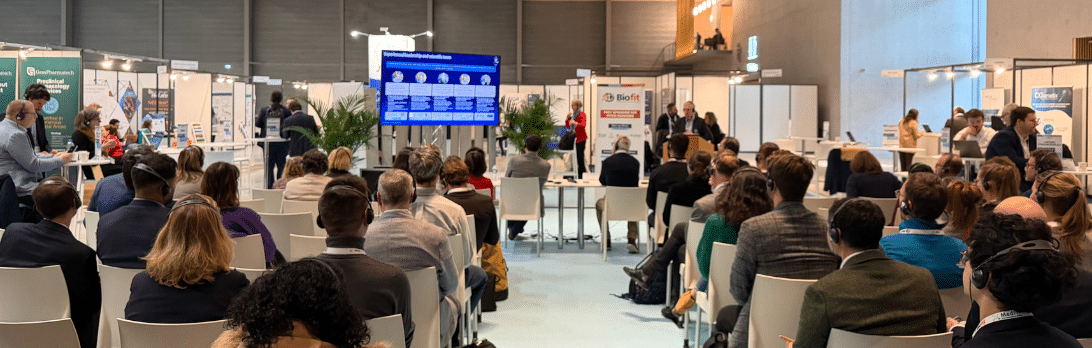
Through its Pitch Sessions, BioFIT provides selected applicants with an opportunity to present their innovations to an international audience of life sciences professionals, including potential investors, industry partners and licensing experts.
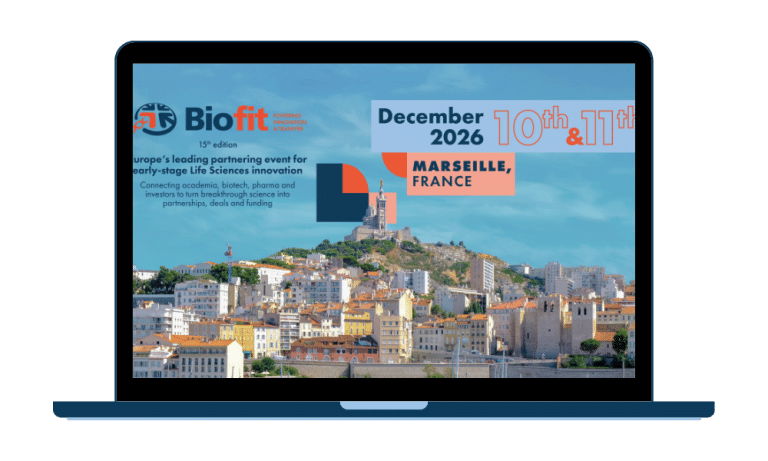
The BioFIT 2026 Pitch Sessions will take place on December 10th & 11th, in Marseille, France.
Note: This analysis covers applications received for the Start-up Slams and Research & Licensing Partnerships categories only. It does not include Animal Health Presentations. The figures refer to applications received, not to the final selection of projects presenting at BioFIT 2026.